The Nature of Love, with David Suzuki
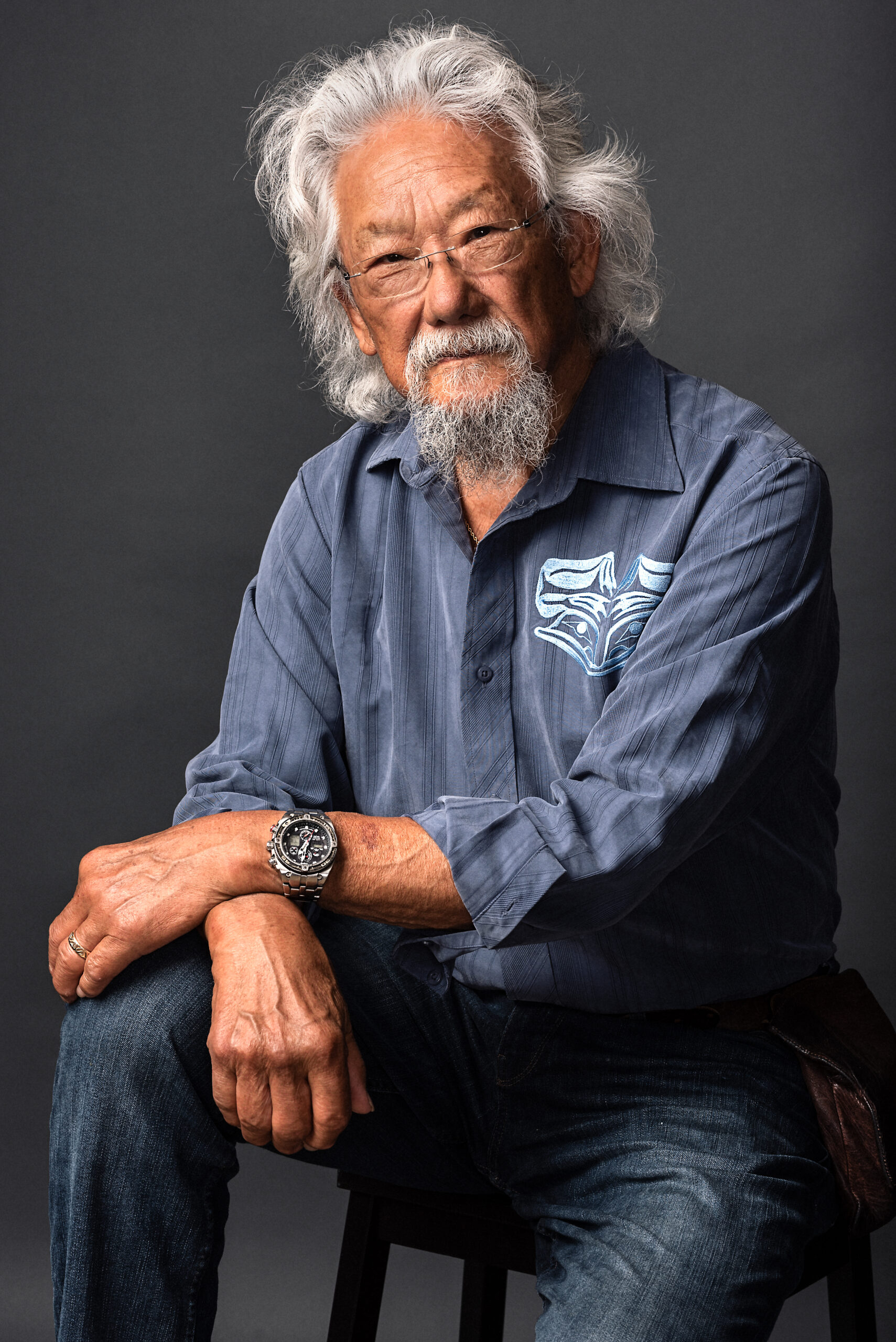
When I call David Suzuki on Monday morning, he is in Guelph, having performed What You Won’t Do For Love at the River Run Centre the evening before. Suzuki is turning 90 in May, but his voice carries the same calm timbre it did when he hosted Quirks and Quarks for CBC Radio back in 1975. If I close my eyes, I can pretend I’m back in my childhood home and an episode of The Nature of Things is playing in the living room.
“My father always said, the problem with Japanese Canadians is in our culture, you don’t want to stand out,” Suzuki says. “There’s this slogan: if a nail sticks out of the floor, you’ve got to pound it down.” His father said that the trouble was, in Canada, Japanese were too reticent. “You have to be able to get up and speak and say what you want. So he actually made me enter public speaking contests, and he trained me to be an orator.”
Today, Suzuki knows he is good at giving speeches. “I can get people to give me a standing ovation, and I can get people to cry,” he says, “but a theatrical experience was really shocking to me.”
So how did David Suzuki find himself on stage beneath a proscenium arch, instead of standing at a lectern or in front of the camera?
“They wanted me to do a play,” Suzuki says about Miriam Fernandes and Ravi Jain of Why Not Theatre and also the creative team behind What You Won’t Do For Love. “They wanted me to play Galileo in a play … but I said, I’m too old to memorize all these lines.” Rather than taking his response as a refusal, Why Not Theatre instead saw it as an invitation; he doesn’t want to memorize lines, but he’s still interested in doing a play.
So Fernandes and Jain flew out to Vancouver and spent a week talking to Suzuki and his wife, Dr. Tara Cullis, the founder of the David Suzuki Foundation. “We had no idea how all this could be translated into a play,” he says. “They went back to Toronto with a week’s worth of recording, and then after a month they came back with kind of an outline, and we were shocked—like, oh my goodness, they’ve actually created something out of these … random stories of our adventures.”
The play that was born from those conversations is intimate.
“I talked a lot about Tara,” Suzuki says, explaining how the team came to the realization that love would be the foundation of their play; this love shared between David and Tara, and the idea of what the world might be like if people can learn to love the planet the way two people love each other.
Choosing to build the play upon the foundation of their love story, the show offers a rare behind-the-scenes look inside the 50-year partnership of two of the world’s most renowned environmentalists, and Suzuki tells me there’s a sense of intimacy. “There’s a scene where I talked about when I was crying—not just crying, but wailing—out of fear for the future, for my grandchildren … but I’m not embarrassed by it.” And the things he thought would be too corny to be good on stage—the retelling of how Suzuki and Cullis met, their first kiss, a scene where they dance—end up being some of the more special moments. “The audience literally went, ohh … you could hear the audience responding.”
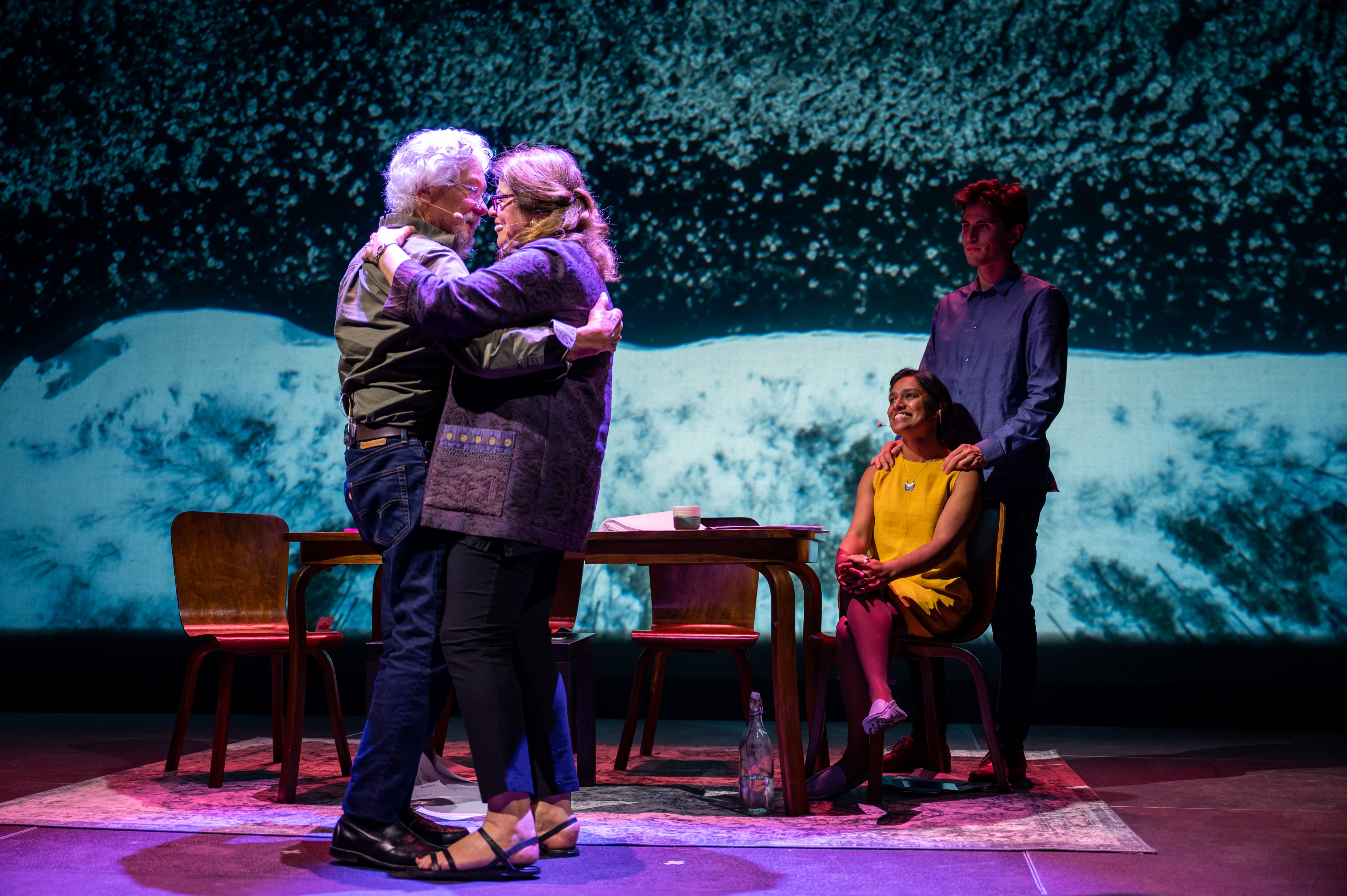
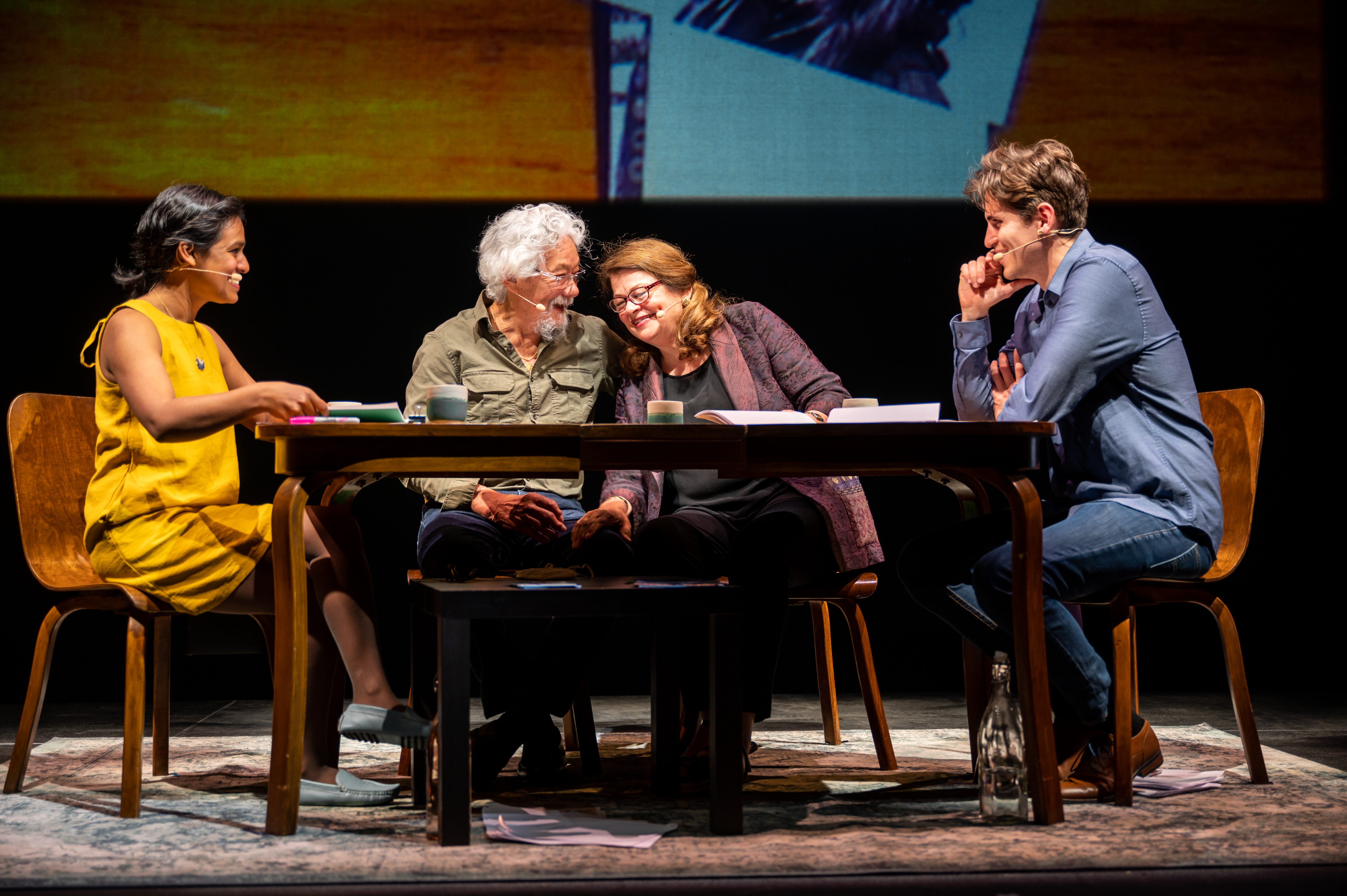
While the material might be supplied by Suzuki and Cullis, it’s Fernandes and Jain who did the shaping. “I mean, these people saw how they could pull the threads of our lives into something that kind of had a point,” he says. “They created it. We just gave them the fuel to use and reorganize.”
Giving credit where credit is due is one of the through-lines of our conversation. David uses The Nature of Things as an example: “I think of all the people involved in the television show. There’s the researchers and the writers and the lighting man and the sound man and the camera man, and all these people doing their things. And when the show comes up, they don’t say, ‘oh gee, the research was really excellent,’ or, ‘did you see the lighting?’ or, ‘wasn’t the sound crisp?’”
He explains that What You Won’t Do For Love reveals who David Suzuki really is: someone created by his wife, Tara Cullis. David draws focus to all the work that Tara has done behind the scenes in starting the David Suzuki Foundation, and admits that he’s “just a front for all the other people—but especially Tara—who do the work. I’ve always known that, but the [play] put it all out there very, very strongly. Our front people, they’re not individuals; they’re made possible by lots and lots of other people busting their asses.”
But of course, Suzuki is certainly one of those people working hard, and he sees the play’s Ontario spring tour as a chance to meet local communities and use this theatrical platform to get out a message: “Get your community prepared. There’s going to be crises. There are going to be emergencies. Get ready for it because the government will not be able to respond fast enough or with the scale that you’re going to need.”
David Suzuki has been sounding this alarm since the late 1980s. I ask if he ever gets fatigued.
“Of course,” he answers matter-of-factly. “Fatigued. Frustrated. Angry.”
Of course there is frustration, how could there not be? He tells me that in 2019, the United Nations released a report saying over half of the animals and plants that were on this planet in 1936 are extinct. He repeats the factoid a second time: “Half of the animals on Earth when I was born are extinct. My god. And another 1,000,000 species are on the brink of going extinct, and that is just lunacy.”
And of course there is anger, seeing as the fossil fuel industry has known about the danger of burning their product since 1959. “They’ve known that, and all this time, they put all their money into a PR campaign to say, ‘no, no, no, it’s not true.’” I almost jump in to say it reminds me of radium companies in the early 20th century, but I’m enjoying listening to his lightly simmering anger too much to interrupt. “They’re the most profitable sector in society, and yet they’re still denying, denying, denying, to make more money. The fate of the future for our grandchildren is right now on the line, and the fossil fuel industry doesn’t care. They just want you to give up … to me, that’s the evil of the planet. It’s that they know full well what their product is doing.”
But beneath the fatigue, frustration, and anger, there is somehow still hope.
Even as Suzuki acknowledges that it’s too late, he sees a way ahead: “To me, my only hope is action. If we try to make a difference, it means we believe a different result is possible … so, my hope is based on the fact we don’t know enough to say it’s too late. Although it is too late. We pass tipping points. It’s too late to go back. But it’s an uncertain future, and it’s the uncertainty that is the hope. We don’t know whether it’s inevitable that we’re all going to die, but the hope is that we’re going to make sure that we don’t, so hope is action. Without action, there is no hope.”
It doesn’t feel like it, but we’ve been talking for the better part of an hour at this point. I wish we could keep talking about the importance of non-governmental funding for environmental organizations, or what it was like when Tara was commuting to teach at Harvard while also raising a family in Toronto, but I know David has to get going to the next stop on his tour.
Before I let him go, I have one last question to ask him, and it’s the same one posed by the play itself: does he think we can learn to love the planet as much as we love other people?
“Oh, yeah,” he says with comforting confidence. “Of course.”
‘What You Won’t Do For Love’ is a hybrid live-theatre and film performance starring renowned environmentalists Drs. David Suzuki and Tara Cullis. The 90 minute play is followed by a 20 minute Talk Back with members of the company. The one-night only show is playing March 11th, 2026, at the Grand Theatre, and you can get your tickets here.