Cue APPLAUSE for ‘Nosebleed’
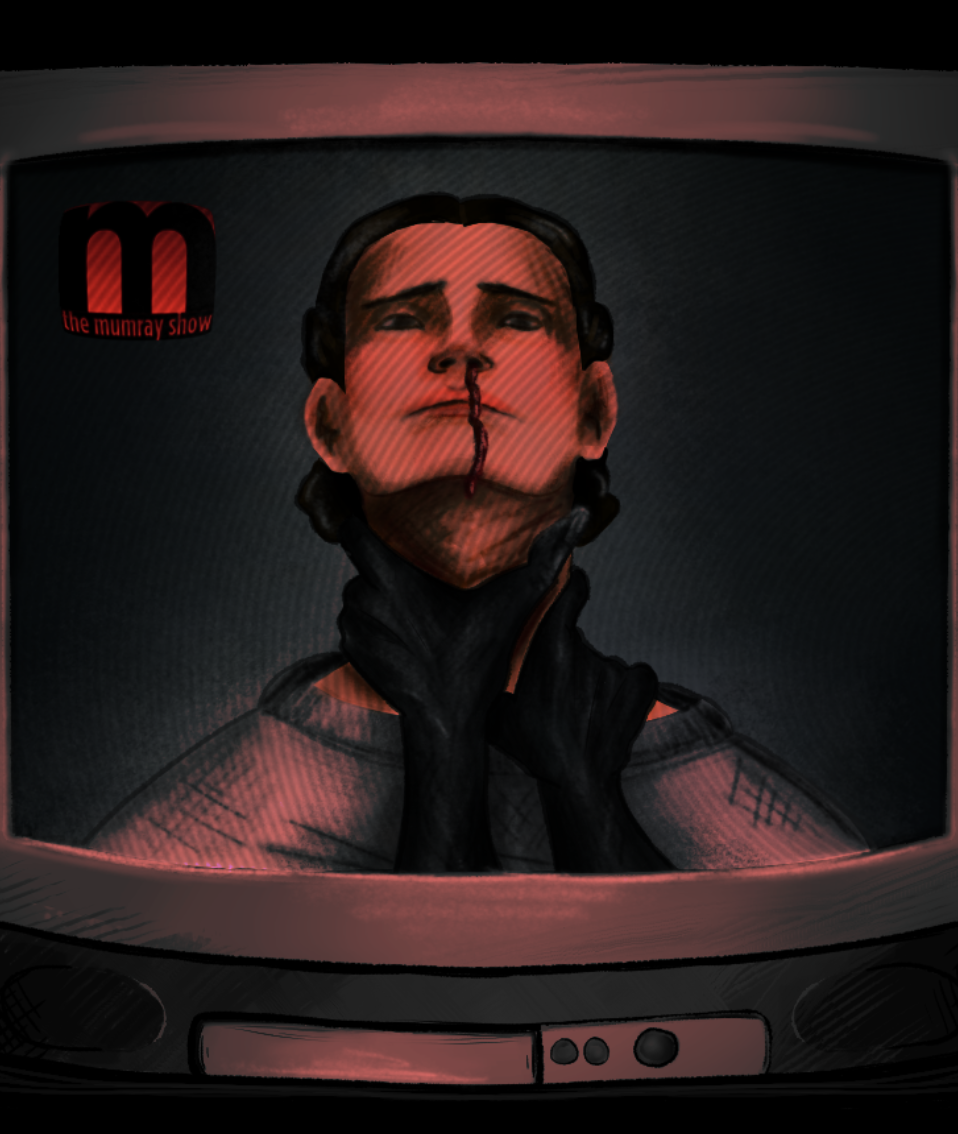
Is it fair that someone’s life should change because of one little nosebleed?
Nosebleed poses this question and more to audiences at the 2026 Theatre Kingston Fringe Festival. Written and directed by Iulia Rus, Nosebleed follows Jean Doe (Isabella Tarantino), who experiences a vicious attack after having a nosebleed and is suddenly thrust into a bizarre talk show featuring charismatic host Mr. Mumray (Kyle Campbell). Alongside a series of comedic witnesses, he grills Jean on the details of her post-nosebleed attack, examining its validity in front of The Mumray Show’s live studio audience.
I was able to catch an earlier iteration of Nosebleed during the winter installment of the Dan Studio Series 2025, DSS Extravaganza, and was thrilled to see it return to the stage in a new way at the Fringe this year. One notable change includes the addition of a directorial figure, played by Shay O’Brien, who opens the show by explaining its interactive elements to the audience and playing a few sound cues (designed by Anandi Dajka) from the show so the audience can rehearse their responses.
We are instructed to applaud, laugh, and gasp when we hear the sound cues, giving guests on The Mumray Show something to react to. This feature descends into surreality throughout the show, where laugh tracks come in at uncomfortable moments and the lighting (designed by Jerall Li) becomes more eerie, shifting between the blinding shine of The Mumray Show to something akin to a horror film. Audiences are at times stunned into silence as they watch certain characters’ distress heighten, no longer wanting to participate in the harm being done to Jean Doe.
The performances across the show are strong: Tarantino projects growing distress as Jean Doe finds herself unable to convince the surrounding characters of her innocence. Both Lauren Joly’s physicality and voice are utterly unsettling as the Monster. Likewise, Witnesses Hugh Jass (Alfonsina) and Mary L’Virginia (Kate Popiel) are as funny as their namesake puns, but bring a more serious tone to the show’s finale.
A performance that guides the entire show is Campbell as Mr. Mumray: he has all the witty charm of a classic talk show host, but with an even more sinister edge that reveals itself in full as the show progresses. From physicality to line delivery, he is unnervingly bubbly and serene while he interrogates the frantic Doe, regardless of the chaos that unfolds onstage.
Nosebleed’s strongest feature is the way it moves audiences to squeamish discomfort about their involvement in the show itself; they are complicit in the harm being done to Jean Doe throughout the performance. That said, I feel the participatory elements needed to be stronger to begin with to further develop this discomfort; some audio cues arrive slightly before organic crowd reactions early on in the show, creating some turbulence as audiences struggle to grasp the performance’s participatory elements. Strengthening audience reactions at the beginning of the play could greatly emphasize their fading toward the end of the show, connecting the audience further to the story’s central allegory.
However at its core, Nosebleed’s ultimate message is particularly powerful in today’s political landscape. I commend these performers and creatives for telling a story that can hopefully inspire change to those who refuse to sympathize with the experiences of the world around them; all because of a nosebleed.
‘Nosebleed’ runs until August 11th at the Tett Centre as part of the 2026 TK Fringe Festival. For tickets and more information, click here.