A Search for Equilibrium: ‘The Third Law’ Finds Its Footing
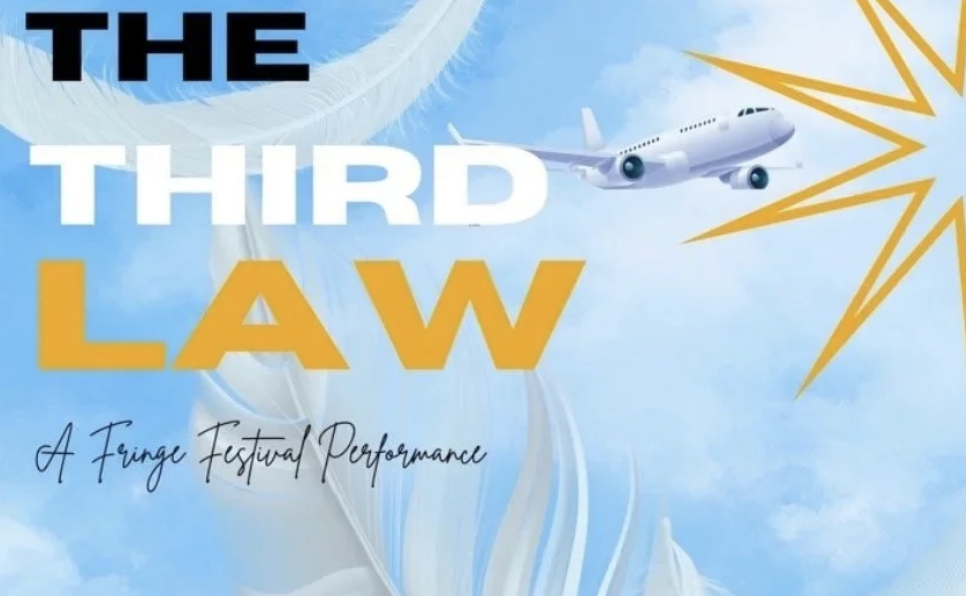
A propellant examination of the juvenile social psyche, The Third Law is an original, one-act play written and directed by 15-year-old Kai Kerr. The Third Law is part of Theatre Kingston’s 2026 Fringe Festival and is staged in the newly refurbished TK Studio. Winging through the halls of an allegorically ambiguous high school-slash-airport, protagonist Arya (Addie May) navigates budding relationships, neurodivergence, bullies, a hidden queer identity, and dying friendships. This high school drama, unburdened by the common romanticisms of youth, is a disturbing glimpse into the neglected truths of teenage life.
The obvious passion exuded by these young performers is heartening to see: Mattias Goldbeck in particular is evidently immersed in the work, depicting two vastly different characters in his double-casted roles as Victor and Ben.
High school dramas written, directed, and performed by high schoolers themselves confront the familiar setting as a daily reality rather than a forced nostalgia burial ground. This piece puts into perspective just how young high school students are– the tragedy of bullying is therefore underlined. Lead actress Addie May is a good casting choice for Arya: very naturally phasing between moments of cloudy angst and upbeat fun, her teenage moods are unexaggerated and human. Portraying the multifaceted antagonists of Elle and Norah, actresses Lily Foyers and Charlotte Stroud respectively elevate their characters with a sense of personal history to which the audience is not privy. The Third Law truly does feel its age: young, unsure, and writhing with potential.
A script leaning towards melodrama, The Third Law’s multitude of topics would have connected better if one significant issue marked a true north for this production. Within its hour-long runtime, Arya is targeted by bullies, led on by an emotionally abused Catholic, experiments with drinking, outs her best friend as transgender, faces public social shaming, is blackmailed by threat of revealing her sexuality, and cracks under the pressure. The amount of content confuses each individual story: while the anthology style presents interesting questions, it calls for a thesis.
The playwriting almost struck brilliance with a very interesting recurring motif of birds and a plane crash metaphor that needed expansion. Working very well for scene transitions, the sound cues of plane announcements helped move the story along in quick procession, also contributing to the sense of atmosphere. However, the moments in which students step into roles of passenger, flight attendant, or captain need additional context to flesh out the concept.
These devices retain information that could be very revealing in terms of highschool dynamics and troubles that the playwright was attempting to speak on: patterns of bird behaviour analyze the inconsistencies of friendships and feelings of insignificance, and the setting of the earth-bound plane depicts the overwhelming nature of growing up. Allegory and metaphor can fall into the range of the surreal, but should strengthen instead of muddle the message it pigeon-carries. This script’s true potential lies in its outlining concepts: its guides rather than its direction.
I am proud of these young people for taking the initiative to put on such a performance, and encourage them to continue in theatre. The Third Law is an obvious step into the realization of a bright young writer, and harbours a talented cast. Such a strong concept having been put to stage is a huge accomplishment, and I look forward to seeing what Kerr and this cast work on next.
‘The Third Law’ runs until August 16th at the Tett Centre as part of the 2026 TK Fringe Festival. For tickets and more information, click here.