A Melancholy Magic: Theatre Kingston Honours Joan Didion
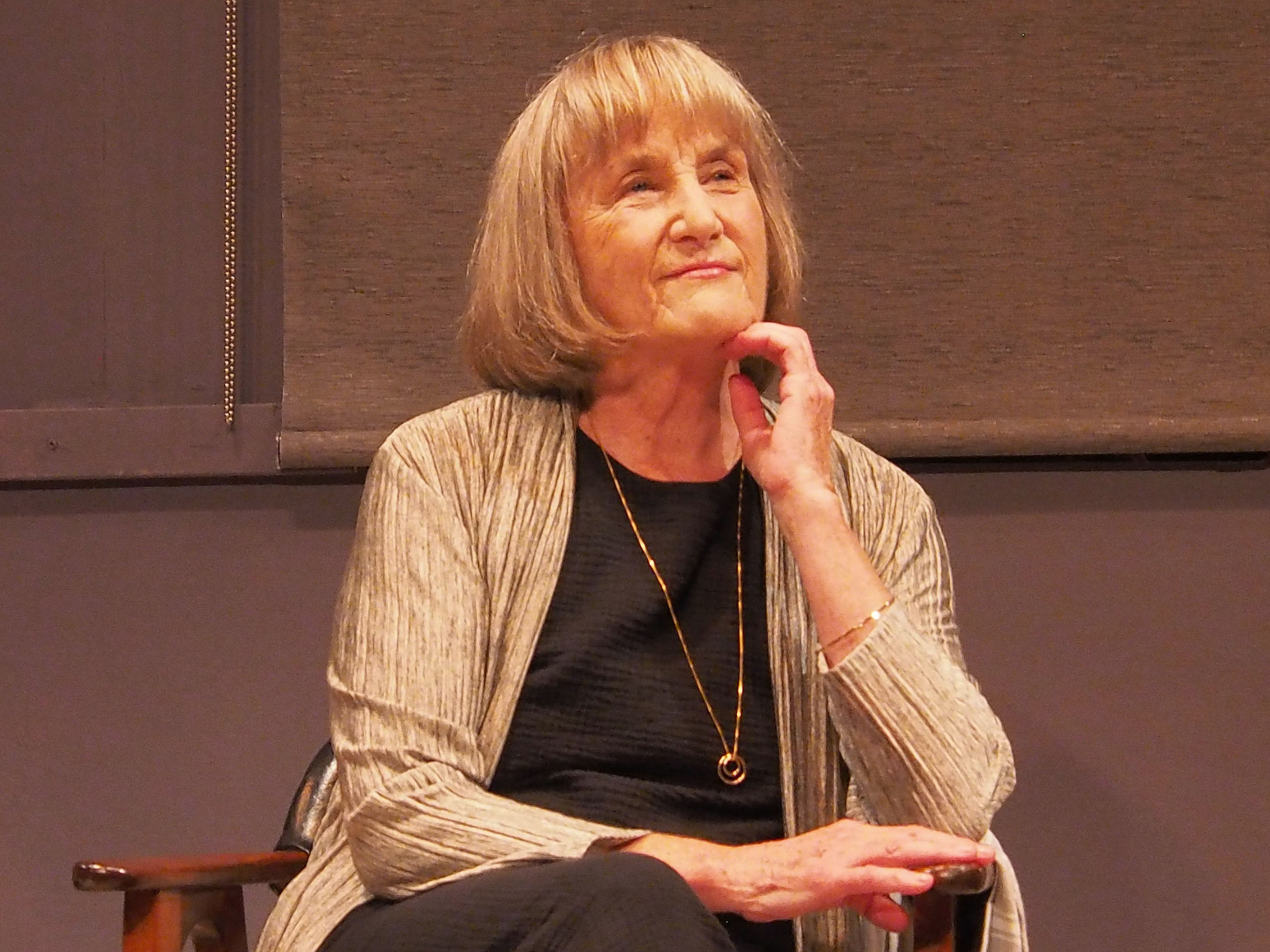
Perhaps you’ve monitored the question– you were given religion young, accepted it, or you read the science, believed it. And perhaps you have pretended that such garnering of information gives you any sort of answer at all. You may have seen it, gotten close to it even; felt it slip right past your ear or out of your hands. For any of these reasons, you may be certain you know what it is. But all you really know is of it: death is the central question of Joan Didion’s one-person memoir play, as death is the great mystery of being alive. Staged in the Kingston Grand Theatre’s Baby Grand by Theatre Kingston, The Year of Magical Thinking tours the long halls of awaiting the reaper, and the ever-endless toil of the ones left behind.
Set in the tumultuous year between the proximal deaths of her husband John Dunne and daughter Quintana Roo, Joan Didion narrates the complex mental journey of experiencing sudden and complete loss. Spanning from December 30, 2003 to August 26, 2005 while collapsing into pockets of time along the way, Didion traces how her perceptions of reality changed in accordance to her grief.
Lead actress and director Joan McBride is a great fit for this script. She knows The Year of Magical Thinking down to its last word, with such poisonous loyalty that she will go back to repeat herself upon a mistake just to get it right. I know the impulse, and the strict dedication is admirable— it does, however, break the magic. McBride is not so easily blown off course, but when she is, she sails home with some splashing. Nevertheless a patient and assured performer, the only other incident– her microphone package coming loose from the mic belt– was handled calmly. McBride merely took a breath and continued on, fixing the problem with visible maturity.
McBride had a refreshingly well-tempered approach to the tone of The Year of Magical Thinking. Illustrious and foreboding, Didion’s musings delve into the primordial fears most mysterious to us. McBride settles into its playfulness as well as its consequence, exploring the perspectives of existential nihilism without falling into the role of the cynic. McBride holds Didion’s character close, allowing her personhood to breathe under the weight of her circumstance. Confronting the overarching mirth in the meaningless, McBride follows Didion’s approach to existentialism with wonder rather than surety. Her understanding of the content is unshakable: McBride reveals the personality within the heaviness of The Year of Magical Thinking.
Sound (Micheal Drolet) and lighting design (Will Smith Blyth) colour her performance with subtle and then substantial contributions: “John’s” voice rings from beyond the barriers of recollection, and deep blue lights whirlpool in a representation of the omnipresent emotional “vortex” into which Didion is sure she will disappear if she dwells on what is lost. Smith Blyth is quick to the draw and never misses a beat as stage manager. He conducts a design backdrop so immersive, even the more involved cues avoid seeming overtly technical–they feel as innate to the experience as McBride herself.
The theatre is simply outfitted in the built set of platformed wooden flooring backed by one sturdy grey wall. A simple chair—one you would find in a waiting room, perchance— is the lone anchor in this harbour of solitary memory. McBride speaks to us from both the chair and the platform, but is restricted to neither. She migrates from its elevated surface to the dim black box flats of the Baby Grand, taking up as much of the stage space as possible. The set, while elegant, is so forgotten in this lonely eulogy that it is rendered inconsequential; I have been whisked off into the troubled Year of Magical Thinking, and all the glorious times that came before.
This show unravelled me. I walked aimlessly for quite a while after my viewing– it questioned my ideas of literature, theatre, and life itself. There need be no point, after all. Isn’t reason just a safe haven from the nothingness of death?
Is that why we search for one? A reason? Is that search liveliness? Is that search our vividity, the one that brightens the skin of those pumping blood, that greys the stale faces of those who have finally found the answer?
You can see the effect of viewing The Year of Magical Thinking. Now these questions can seem monstrous in their enormity, and almost funny in their seeming frivolity, to the point it’s almost laughable to witness another worry over such impossibilities. But I didn’t feel small in the face of wonder while watching McBride recite Didion’s words. I felt accompanied in my questioning. The play is a real comfort in the face of uncertainty, which is saying a lot: in some ways, uncertainty is all we’ve got.
The Year of Magical Thinking ran at the Baby Grand Theatre from Oct 13- 25. For more information on Theatre Kingston and tickets for their upcoming show, ‘Strolling Player,’ click here.