‘None of this is random in this city’: Director Mary Francis Moore on Bringing ‘It’s a Good Life If You Don’t Weaken’ Home to Kingston
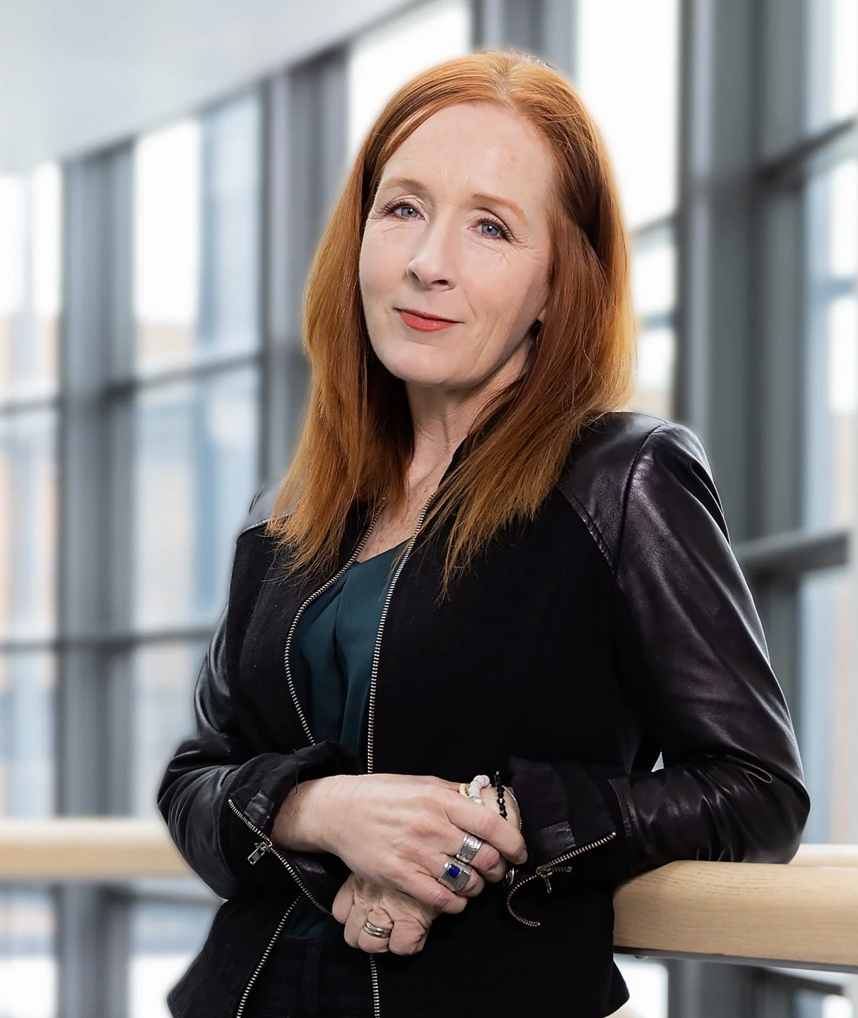
Following the Kingston debut of It’s a Good Life If You Don’t Weaken, a new musical presented by Thousand Islands Playhouse in partnership with Theatre Aquarius, I had the chance to speak with Director Mary Francis Moore. As Artistic Director of Theatre Aquarius, Moore has been instrumental in It’s a Good Life’s conception, development, and production nearly every step of the way. In our conversation, she discussed the challenges of creating a new Canadian musical, The Tragically Hip’s influence on the show, and how she tackled the monumental task of bringing Kingston’s story to Kingston audiences.
This interview has been edited for length and clarity.
To kick things off, it would be impossible not to mention that while we’re discussing It’s a Good Life’s Kingston run, we’re both located outside the city, in Hamilton, at the time of this interview. With that in mind, as Artistic Director of Hamilton’s Theatre Aquarius, how did your involvement with this Kingstonian story begin?
It was just about two years ago. I was directing the show Maggie… and Michael [Rubinoff] was the commercial producer.
He was talking about [how] he’d had this idea for this show; he was such a Tragically Hip fan, and was trying to find a way into the music. He had met the band, and they said that he could have the rights to [create] the show, but they didn’t want it to be about them. They didn’t want any sort of biopic.
So, Michael had come up with several different ideas of what the entry point into the story could be. I thought it was really exciting, and, of course, I’m always looking for cool projects for Theatre Aquarius. [Rubinoff] hadn’t decided where the workshop would be, and I said, “Well, you know, if you do it in Hamilton, you could use the space.”
Then around two years ago, they did a sharing of the workshop, in Toronto, and I went and saw that, and… was like, “I’ll do it. Count me in.” It was a leap of faith, but I just knew Hamilton audiences would get behind The Tragically Hip. What I love about Hamilton is: I think audiences are really great at trying the unknown–they love a title that they know, but they’re also daring, and bold, and they love new stuff.
Funny enough, I was chatting with some friends recently about the differences between audience responses to the show across the two cities; they had seen the show in Hamilton, while I saw it in Kingston. I’m interested to know if you, as a director, noticed any differences between Kingston audience reactions to the show? What are some of the similarities that have remained regardless of location?
[They share] the same laughs. [They share] the same sort of responses. But, in Kingston, every time there was a reference, it would get a cheer.
I think there’s a beautiful sentimentality to the show in Kingston, which could only happen in Kingston. There’s such pride, and it was not lost on me. I kept saying to the actors while we were in rehearsal, “None of this is random in this city.” Everything: the impact of the band’s music, the guitar picks that say “Forever Hip,” the murals… we had to come into this city with the respect of saying, “We’re just offering this to you. We are not claiming to know your city.” The response has been so incredible, and the generosity of Kingston audiences has been amazing, with people sending us emails and messages on Instagram.
For Kingston audiences, there were things I think that we couldn’t have even expected would get reactions, and so that was really cool too; little things that we were Easter eggs that only Kingstonians would understand. When those would get responses, we were like, “Okay, we’ve done a good job.”
You mentioned The Tragically Hip did not want a biopic; that said, I find jukebox musicals often receive mixed responses from traditional musical theatre fans because the music isn’t written specifically to advance the plot along. On the other hand, you may have huge Hip fans hearing about the show and asking, “Well, why isn’t it about them?” What did the process of merging this story with music fans know and love look like, especially for someone who has been working with these writers for a while? How did you get to this current stage in the show?
It was so organic. It was Jesse [LaVercombe], Ahmed [Moneka] and I texting each other at midnight. I remember listening to “Cordelia” one day and thinking about King Lear. I called Jesse and Ahmed and [went], “What if it’s her relationship with her mother? What if that’s the tension?” It’s not that Jonathan has [done] anything so awful, because Jonathan has to be a redeeming character… But what if the dead mother is the point of conflict between them?
Ahmed and Jesse are such great collaborators… And there are also Ahmed’s deep Iraqi roots, and Jesse’s additional perspective of what it is to be a newcomer in Canada; they both have their feet firmly planted here, but they also have that ability to look at Canada from the outside.
At the end of Act One, we were rehearsing and [there] was this moment in the room of, “His grief is so huge. How do you sing those words in English?” So, it was Fadi singing the song. But how do we engage Waleed in that moment?
I’ll never forget being in rehearsal with Ali [Momen] and Ahmed, and them singing this grief, this chant, this lament. Bob [Foster], our orchestrator and music supervisor, and Richard [Evans], our music director, began playing along and organically improvising what that sound was, and it became the end of that act. You can’t prepare for that kind of stuff.
As a director, you have a way of making these characters feel very fleshed out. I would love to hear some of your thoughts on their creation, whether in the rehearsal room or when combined with the writing process, and how that changed between the Hamilton and Kingston runs of the show.
I think that the gift of The Hip’s music is that it’s so gorgeous, and filled with poetry and metaphor. It allowed us to lay out the breadcrumbs for these characters, and the songs were really the subtext for their subconsciousness. Sometimes, we had an idea of a song we would do, and who would sing it, but when we’d hear it, we’d go, “That doesn’t make any sense.”
Without giving too much away, we felt like we didn’t hear Kate sing enough in Hamilton, so by the time we got to her big number, we felt we needed to have heard her a little bit more. Then it was overcorrected, and they gave her way more in Act One. When we were in rehearsal in Gananoque, we cut things, because the payoff of that big number didn’t feel the same anymore.
Because it was the same creative team, we all knew the piece so well, and it was still in our bones when we got to Gananoque. It felt like a reunion. Every time they’d open their mouth as a character, I’d go, “Oh, hello, old friend.” But our goal going in was just to clean up and tighten a few things.
One more question for you before we wrap things up: there is another planned staging of the show in Montreal in 2027. What is your goal for the work, as you continue to stage it for newer audiences?
Kingston was so informative to us, and the outpouring of love [that we] felt in Kingston, that we felt in Hamilton, and for it to happen twice… This feeling is incredible.
I think we need to take some time. We need to get a little bit of distance from it, but there’s interest in the show across the country, and that’s really cool, because in our industry, it’s hard for a new Canadian work to get a second life, let alone a third, a fourth, and a fifth life.
I think it really speaks to the emotional resonance of the show. I said something last week about how, if you’ve ever loved somebody, there’s moments of this show that will appeal to you. I’m not sure yet what we’ll do with it besides adapt to the space that is at that theatre. But Kingston has just been such a joy. The city itself is so incredible. Our entire cast and crew, our creative team, we’ve just been hanging out, getting to know Kingston, and it’s been really cool to get to know the city as you’re doing a show about the city. We are actually walking down Princess Street, and now we know what Princess Street is like; the little moments when [the team] can look around them and say, “Oh, I get it. I know now.”
‘It’s a Good Life If You Don’t Weaken’ was presented by Thousand Islands Playhouse and Theatre Aquarius, and played at the Kingston Grand Theatre until November 8th, 2026. More information can be found here.
Mary Francis Moore is an award-winning director, playwright and dramaturg. Recognized for championing new works, Moore has dramaturged and directed numerous plays that have toured across Canada, the United States and the United Kingdom. She has also developed several new musicals with established recording artists Johnny Reid, Amy Sky, Twin Flames and the Estate of Rita MacNeil. Her directing credits at Theatre Aquarius in Hamilton, ON, where she currently serves as Artistic Director, include: Maggie, The Hours That Remain, Hairspray: The Broadway Musical and Home for The Holidays. She co-wrote the smash-hit play Bittergirl with fellow collaborators, Annabel Fitzsimmons and Alison Lawrence. This acclaimed show was produced across Canada (including Theatre Aquarius), London UK, and showcased in NYC.