‘Goodnight Desdemona (Good Morning Juliet)’: Shakespeare Meets the Modern Day Human
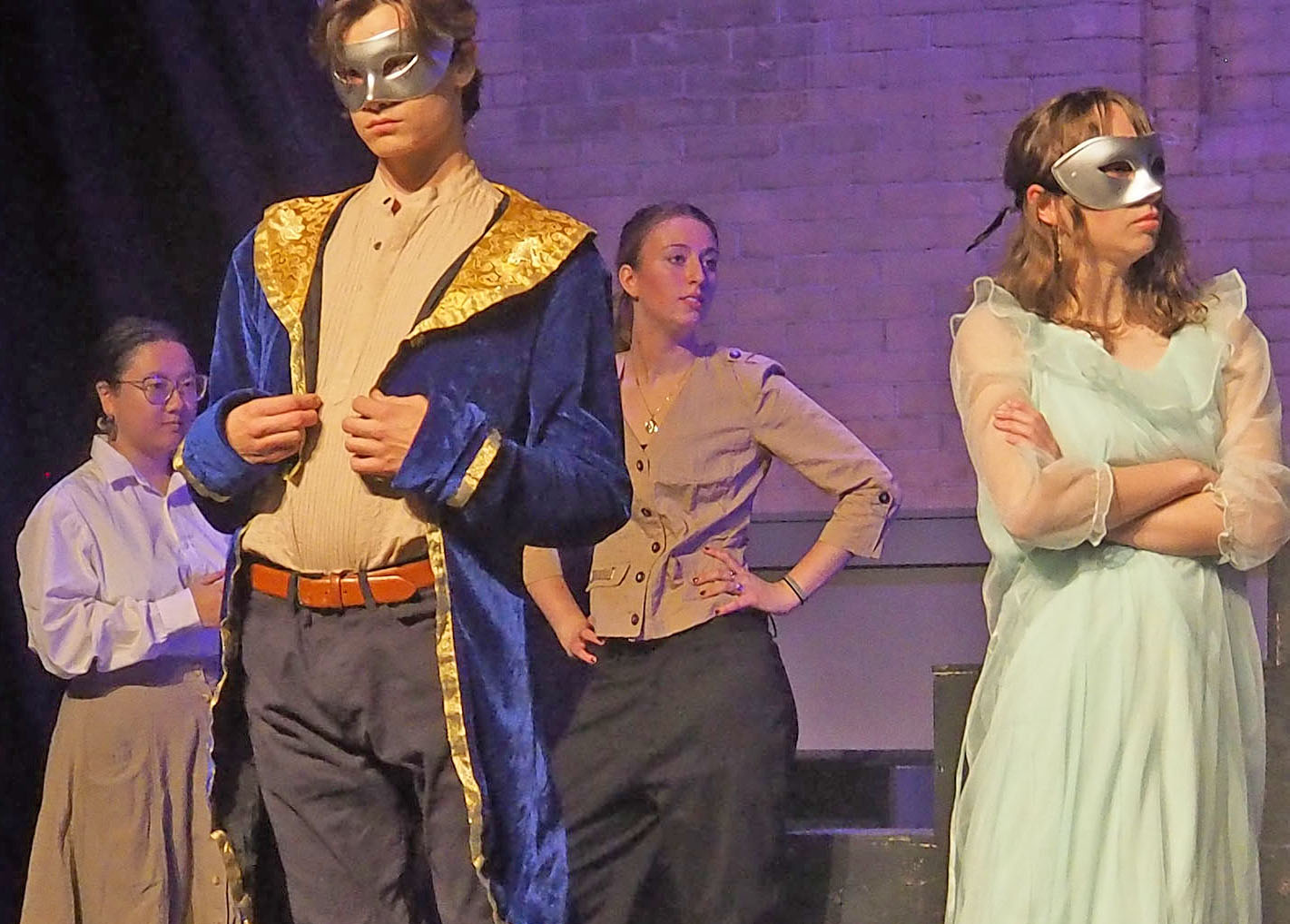
Have you ever read a book and wished you could change a character’s fate? My first introduction to Shakespeare was struggling to decipher Romeo and Juliet on my own, without the help of SparkNotes (mostly because I didn’t know it existed), and for years afterward, whenever I thought about the play, I caught myself wishing I could change the characters’ endings. But what if that’s actually possible? Goodnight Desdemona (Good Morning Juliet), written by Ann-Marie MacDonald, directed by Gaïa Adjemian, and presented by Queen’s Theatre Troupe, explores that exact idea. This comedic, feminist retelling of Shakespeare’s Othello and Romeo and Juliet takes place at Kingston’s very own Queen’s University. Hopeless PhD student Constance Ledbelly (Olivia Humphries) finds herself first figuratively, and then literally, tumbling into the worlds of both plays, interrupting major turning points and changing the characters’ fates as well as her own.
One of the funniest aspects of this play is that once the characters are saved by Constance, we get to see their true personalities, almost as if someone dials each of them up to 150%. Desdemona (Kaitlin Forest) becomes far more merciless and bloodthirsty than in the original Othello, while Romeo (Pierce Lindsay) and Juliet (Charlotte Fursier) are absurdly passionate about romance, but not necessarily with each other. This over-the-top exaggeration is not only hilarious, but also a clever exploration of the characters, the language, and the shared themes of Shakespeare’s plays. Sometimes, the personalities of Shakespearean characters can be misunderstood or feel toned down, especially if the language is unfamiliar, so seeing these characters in their most amplified forms is both eye-opening and educational.
Although the play includes a good amount of Shakespearean dialogue—as Romeo and Juliet are from the 1500s and Desdemona from the early 1600s—it is still relatively easy to follow. One of the beauties of Shakespeare is that his language becomes much easier to follow when it is heard aloud rather than read, so don’t let that deter you from the show. Constance also provides a wonderfully grounding presence. As a modern-day character, she acts as an interpreter of sorts, showing us how someone from this century would speak to, interact with, and react to the mannerisms and behaviours of people from entirely different time periods.
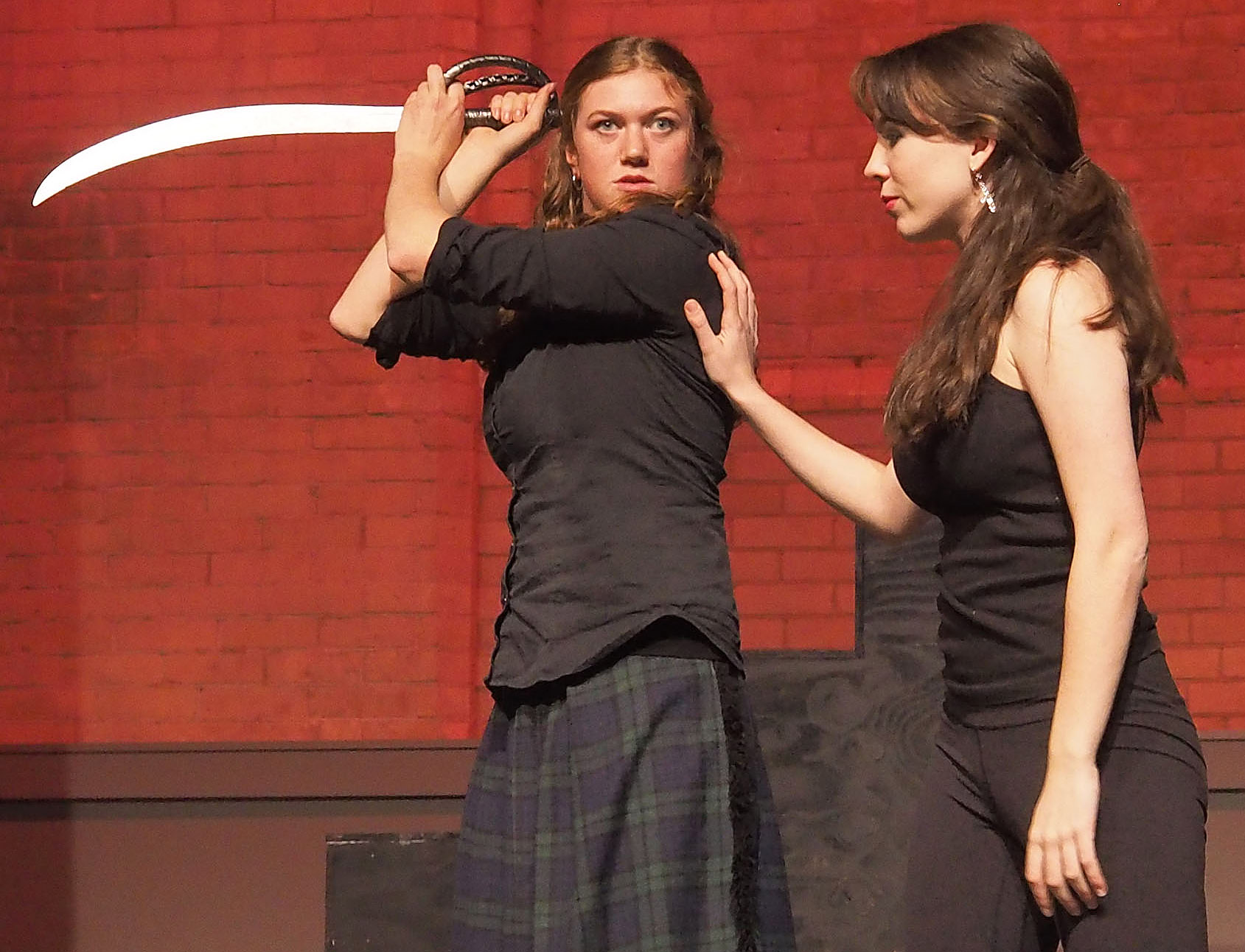
The play, of course, would not be complete without its amazing actors. Humphries plays Constance with great relatability. Most audience members have experienced something she goes through: the highs and lows of academia—its uncertainty, excitement, and dread. Even those who don’t share Constance’s academic pursuits can still relate to her feelings. Forest brings such fierceness that the production would feel very dull without her intense presence. Meanwhile, Lindsay and Fursier’s portrayals fully embrace the exaggerated, naive star-crossed-lover theatrics; their commitment to their characters’ over-the-top personalities make the play even more hilarious.
Lighting design by Jerall Li enhances the storytelling and comedy of the play. The lights suddenly snap to pink during scenes where the characters realize they have fallen in love, only to abruptly switch back to normal as their monologue ends. The production also handles ominous moments remarkably well. When the front lights are cut, and only the back of the stage remains illuminated, the chorus (Sofi Djordjevic, Olivia Stathis, and October Hua) appears to be entirely engulfed in shadow. Their still, featureless silhouettes lined up in formation are very eerie and sent a chill down my spine every time it happened.
Goodnight Desdemona (Good Morning Juliet) is a fun production that celebrates and maintains both the spirit and complexity of Shakespeare’s work while also spinning an entirely fresh and new story out of it. With skillful performances, visual effects, and relatable, comedic storytelling, Queen’s Theatre Troupe delivers a delightful show that is full of hilarious surprises, and I have to admit, it was wonderfully cathartic watching someone undo these Shakespearean tragedies the same way I have imagined for years.
‘Goodnight Desdemona (Good Morning Juliet)’ played at Theological Hall, from November 26-29, 2025. More information can be found here.