In Conversation With: Daniele Bartolini, Christoph Ibrahim, et Vincent Leblanc-Beaudoin
Pour lire cet article en français, cliquez ici.
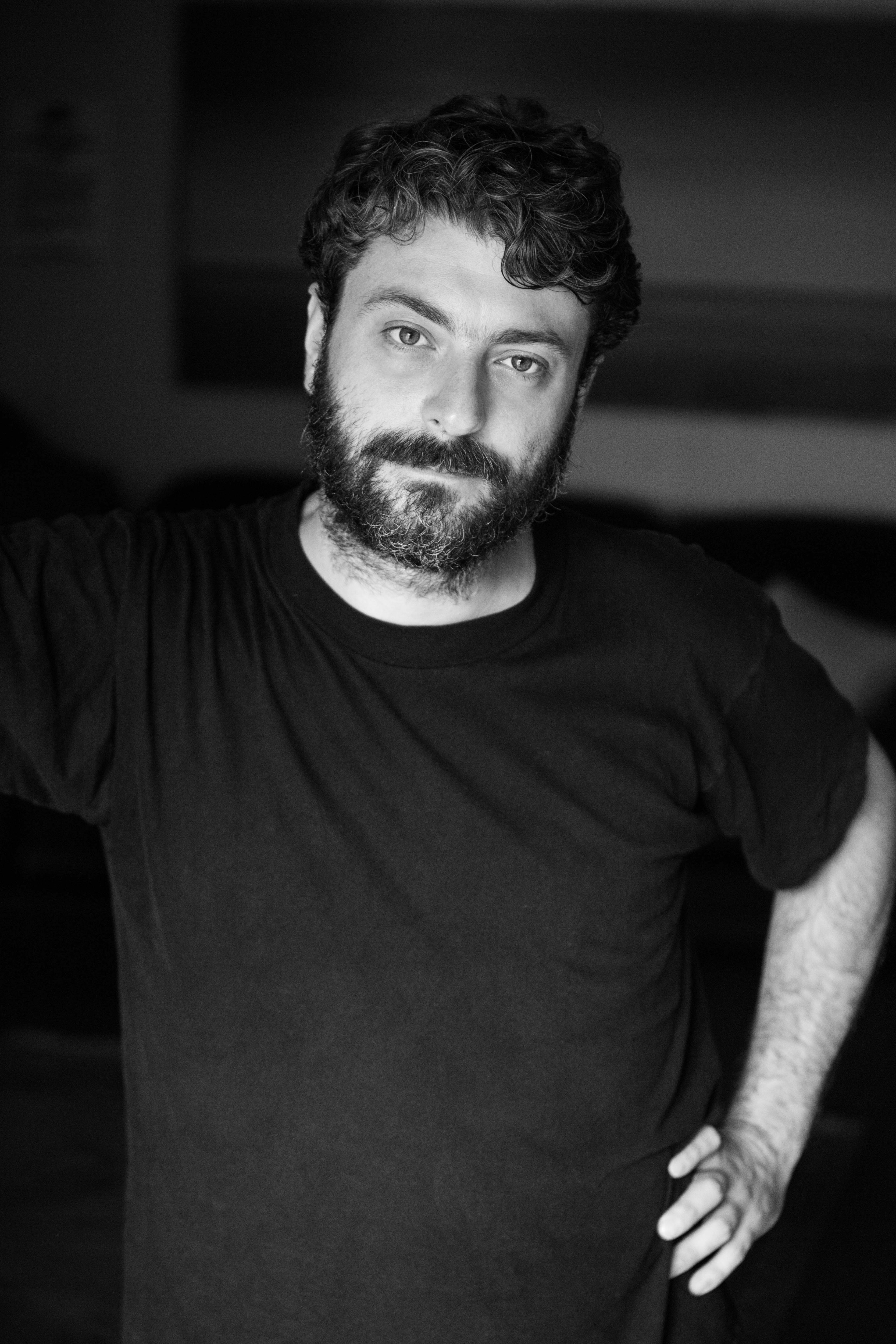
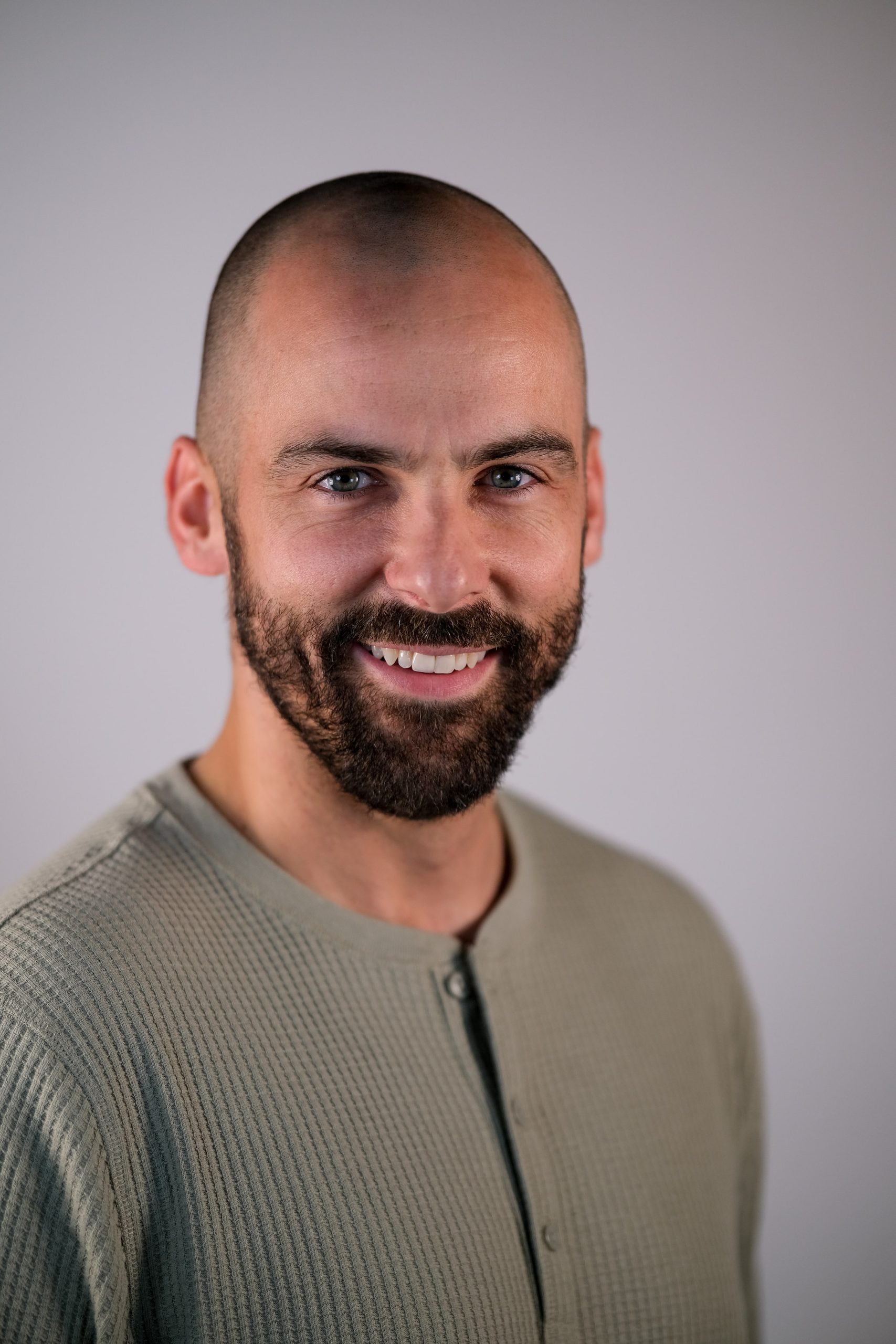
Daniele Bartolini, Christoph Ibrahim, and Vincent Leblanc-Beaudoin are the creative team behind Le Concierge, which opened the Kick & Push Festival last night. Tracey Guptill, the Artistic Director of Centre culturel Frontenac, sat down with them recently to chat about immersive theatre, site specific work, and the ephemeral power of silence.
This interview has been edited for length and clarity.
What a pleasure to be sitting with the three co-creators of Le Concierge—finalement! We’ve been trying to get you here for…
Leblanc-Beaudoin: Almost three years.
How does producing your own work influence the creative process?
Bartolini: I think that having the producing control is excellent for these kinds of shows because the practice is so unique and different and the process is tailored to this piece. And in this case Vincent is the lead producer, who did also the fundraising and everything, so to my experience of working with so many other companies when it comes to site specific and immersive, there are not always the right instruments to understand what the work needs. So I think it’s an ideal place and also it’s a small intimate show. And to have also a small intimate team that does a bit of multitasking, I think it mirrors very well what the audience experience is.
So is there something that you hope the audience takes with them after experiencing the show?
Bartolini: We have a whole book of answers. We hope for one million of them!
Ibrahim: I always want people to come in, and leave having lived something different, having walked through somebody else’s shoes. When you watch a show sitting, you’re watching and living vicariously through, but getting to walk through the space and actually experience that, it is such a different and unique way of storytelling that we don’t get exposed to very often. So, for me it’s about getting people immersed fully in this story and in this character.
What other possibilities do you find immersive theatre creates that a more traditional theatre does not?
Leblanc-Beaudoin: Well, pertaining to this piece, it’s a wordless piece. We experimented with what are those possibilities, and how do we do storytelling in a non-textual way. Some of those things that we can use are the use of light or not, the use of silence or not, the use of musical composition, as designed by Andrea Gozzi, who is our sound designer, but also what are the sounds of the school, what are the sounds of the environment without us messing with it and embracing that. How do we play with rhythm? How do we play with stillness? It’s almost like an orchestral thing where we use a little bit of this, a little bit of that. In terms of the immersive experience, proximity to the audience, playing with their expectations, surprising them, and using all senses to activate their imagination.
Amazing. What drew you to immersive theatre in the first place? When did that happen for you?
Bartolini: Wow, I haven’t been asked this question in such a long time. It’s fun to revisit. When I was back in Italy, I thought that the work was so autoreferential, and not taking care of the audience. There was not a real act of communication. It began from a youthful frustration, and ever since then I’ve been obsessed to always talk to the audience, not only verbally, but to connect—a real connection, a proximity. It began from some sort of intuition: how can we rethink this? How can we shake it up and make it a little more rock’n’roll?
Coming to Canada as a newcomer, being exposed to a completely new geography, the first time I stepped into an alleyway, I was like, “Oh my God, this is insane,” and everybody’s like, “What? This is just where garages are.” But for me, it was new and it was exciting. The city of Toronto, the human geography of people around me was very compelling. So that’s what led to creating the show The Stranger, which is what brought Vincent and me together.
I can identify with that impulse of finding yourself in different places and feeling like a show belongs here.
Bartolini: Yeah, there are possibilities in every environment, and it speaks to this piece. The space is a scene partner. Vincent doesn’t really see the audience; he works with the space literally. The space is elevated as an actor.
Which kind of goes back to you, Vincent, mentioning several years of creation. Do you want to speak a little bit about the development of this piece?
Leblanc-Beaudoin: Yeah, we developed over seven years.
We started brainstorming together. I started applying for grants and got some development money and started working at a school in northern Toronto called Monseigneur-de-Charbonnel. We did our first residency there, already having some ideas of scenes, just ingredients that we wanted to put together.
We have this working relationship where he throws out an idea, we run with it. I have an image, he runs with it, and we throw ideas around, sculpting it. We’ve developed maybe 30 scenes that we can pick from, and the final show is maybe 15 of those. So with Christoph, now that we’re on tour, we develop according to the space, the structure of the school, the architecture—everything that’s possible in the school, we put a spotlight on it.

So what’s it like to adapt the piece to a new environment?
Leblanc-Beaudoin: All three of us are like kids at a candy store when we arrive at a school.
Ibrahim: We become like the nosy neighbor. We want to open every door, and we want to see every nook and cranny and all the secret places that no one ever gets to see. It’s exciting, especially if we get handed keys.
That school Grandmaster key.
Ibrahim: Grandmaster key is gold.
Would you describe this particular style of theatre as physical theatre? What does that term mean to you, and what does it allow you to explore as artists?
Leblanc-Beaudoin: I think it is physical theatre because it’s scriptless or wordless. My body becomes a storytelling device, and that is what physical theatre is. From my background with physical theatre, it informs it a great deal. Same for clown, in terms of listening to the audience, to feel their breath, to feel Christoph in the space with me.
A key part of bringing this show into a new school is the week-long artistic residency with students where you develop the trajectory of the show and explore how they might participate in the work. How much do the students become part of the life of the work? And can their presence change the way the show evolves or even the meaning of the piece?
Bartolini: Absolutely. As a directorial approach, and as a teamwork approach, we always begin from the individual.
What do you like? What are your skills? What is something you’re very passionate about? Do you play a music instrument? Are you into acting?
It’s really a conversation that is unique to the person who’s there. The students and their energy… there is a big process of discovery.
For me, theatre is a place for existing. Simple to say, but in our society I think it’s becoming more and more rare. So, it’s very important to renew this conversation with the younger generations. We open up this process that is still very different and unexplored. I would have loved to be 15 and be like, “What? This exists?” Even if it’s like a micro-activation. I’m one of those kids. I don’t come from an artist family. I would have never ended up here if I was not exposed to theatre in high school.
So not just change the evolution of the show, but people’s lives potentially.
Bartolini: In a very humble way. But yes, let’s make it accessible. Maybe someone is going to join the arts in general.
You’ve described this as a political show, Vincent. What did you want to reveal about a person whose daily work is often unnoticed? What makes it political for you?
Leblanc-Beaudoin: I feel like so often in society there are forgotten, unsung heroes that are almost invisible. I’ve always had a deep sense of equality and equity, and this show speaks to that directly—that there are no minor characters, there are no small roles, and whatever your job may be, it’s worthy of exploration. Whatever your passion may be, it’s worthy of discussion.
In that sense, it’s political because it makes a statement towards blue-collar people who do the backstage work of society and are never given the props or kudos. It’s a tribute and homage to them and invites people to perhaps have more respect for them.
Bartolini: I also think there is a mythological side to these characters. It’s almost like this invisible act of holding the world together and preparing a space.
The political dimension is about the character, but it’s also about bringing a group of strangers together and finding a way to coexist and to be in silence.
Silence is deeply uncomfortable. Lots of people avoid it.
That kind of encounter is very political.
It goes back to physical theatre. We would like to add the body of the spectator. It’s another level of physical theatre.
Would you like to describe the show in three words?
Ibrahim: Exploration. Solitude. Discovery.
Wonderful. What a treat to sit with you folks.
Daniele Bartolini is a Florence-born theatre creator, filmmaker, and pioneer of audience-specific theatre. Work commissioned by the Stratford Festival and La Biennale di Venezia and other institutions worldwide. Christoph Ibrahim is a Toronto-based actor, singer, stage manager, director, and educator working primarily in Musical Theatre and site-specific. Vincent Leblanc-Beaudoin is many things. Actor. Clown. Theatre maker. Director. Indie producer. The body is Vincent’s main vector for storytelling. He has a kinesthetic and corporeal approach to acting.
Tickets for ‘Le Concierge’ on sale here. From Thursday July 23 till Tuesday July 28, 2026 at 7:30 pm in Centre scolaire-communautaire, 1290, rue Wheathill, Kingston.